
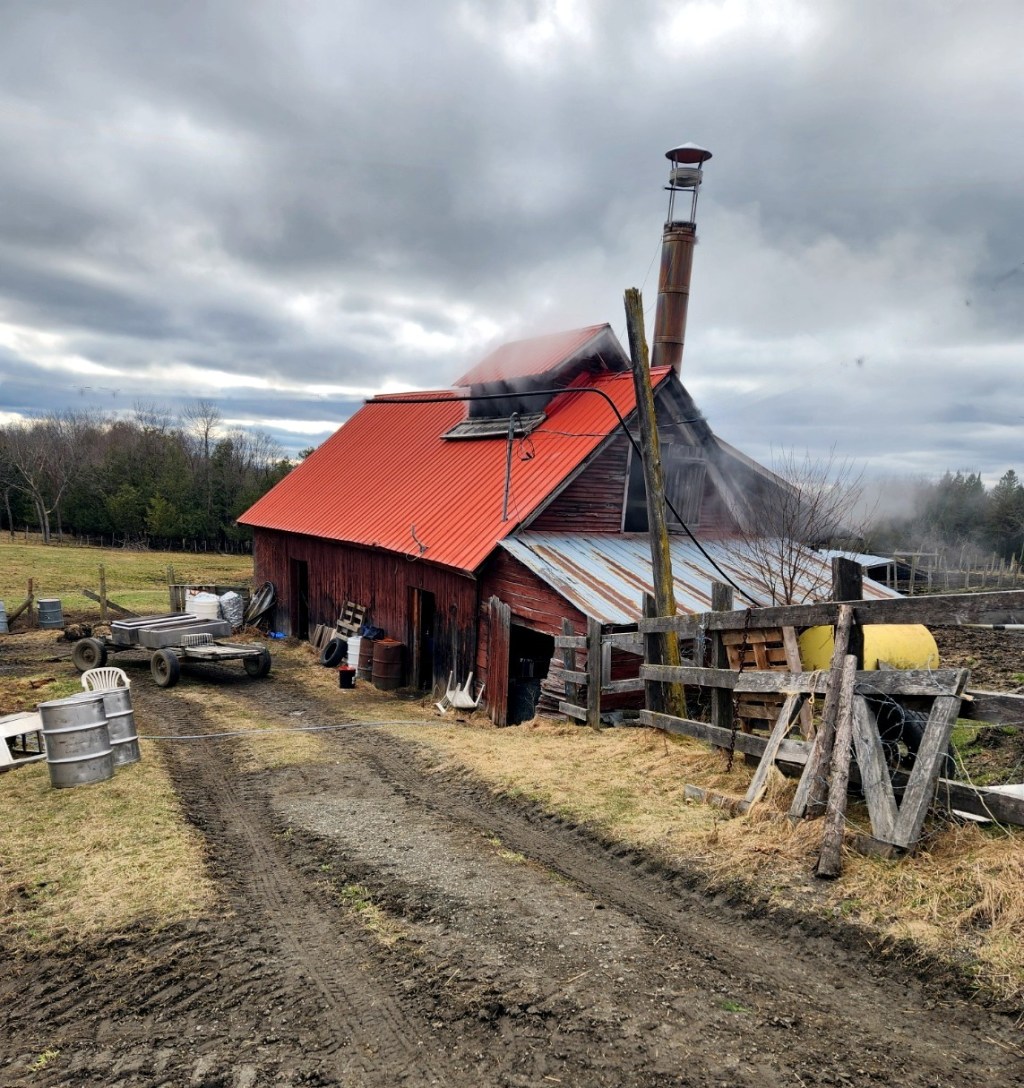
When William Henry Holmes purchased his farm in 1897 it was already producing maple syrup. Wooden buckets and barrels were used to gather the sap and wood fires boiled it down to the precious golden syrup. Horses did the hauling and humans did the gathering.
By the time Bernard and Gladys took over the family farm, new methods were being gradually introduced. Metal containers took over wood buckets and evaporators replaced iron pots. Tractors carried the big containers to the sugar house. But still, when the sap flowed, the boiling couldn’t stop – many sleepless nights happened. Each year had to be spent felling, cutting, splitting and stocking wood for fuel the following year – a suggested formula was ½ cord per 50 taps.
In 1960, The 3rd generation, Stanley and JoAnne, carried on the tradition that they learned from their parents and grandparents. When I asked Stanley why he decided to take over the family farm he told me that he was living with his brothers in the city and he distinctly remembered the smell of the sap luring him home.
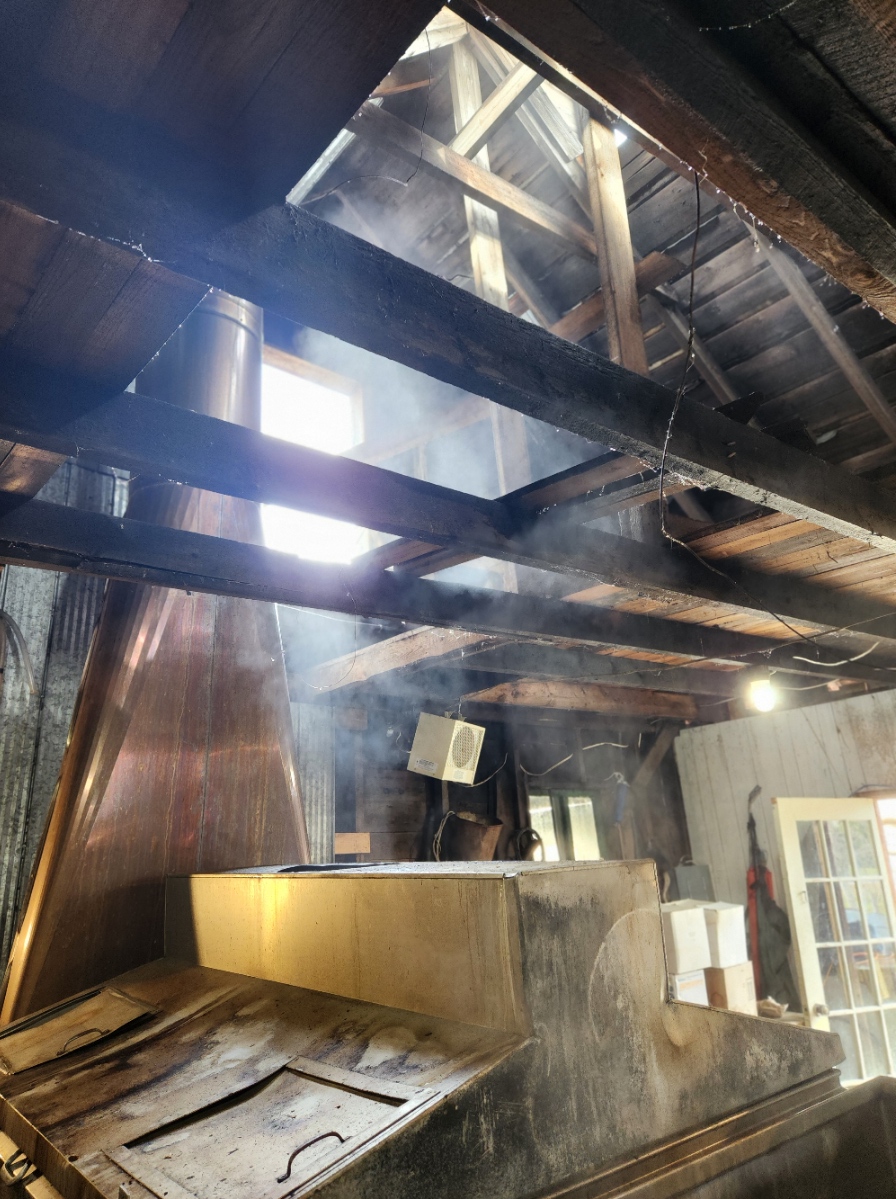
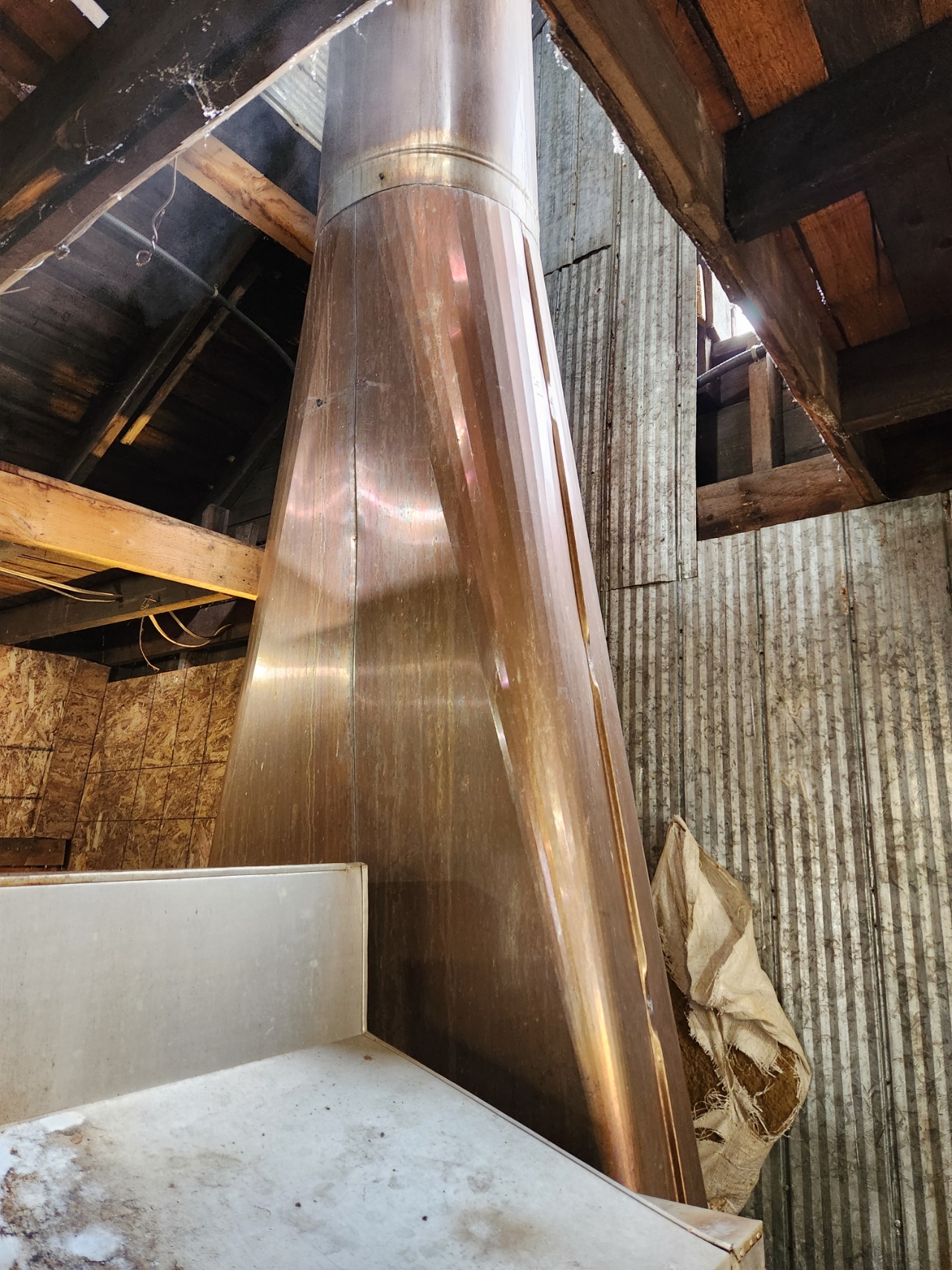
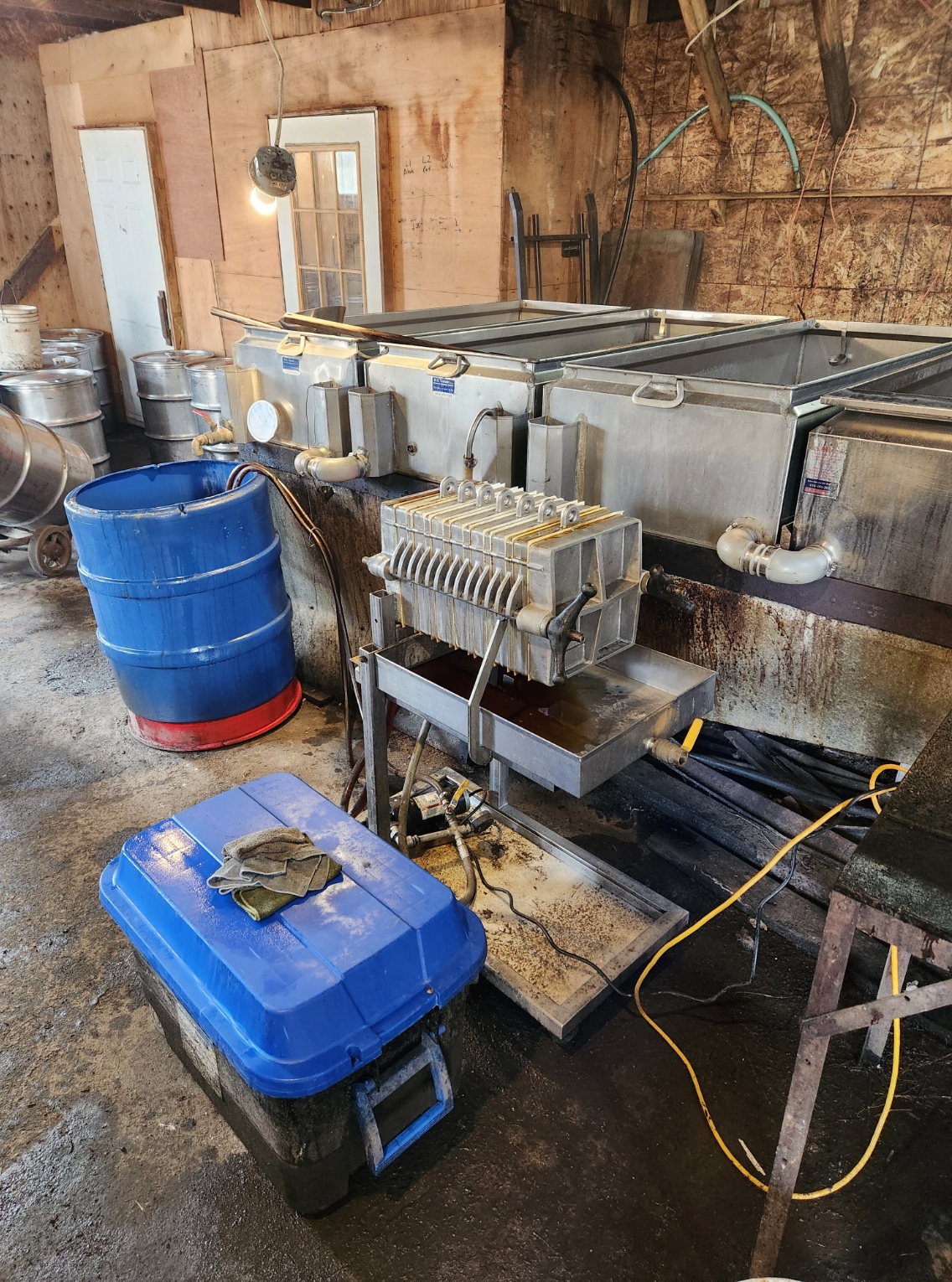
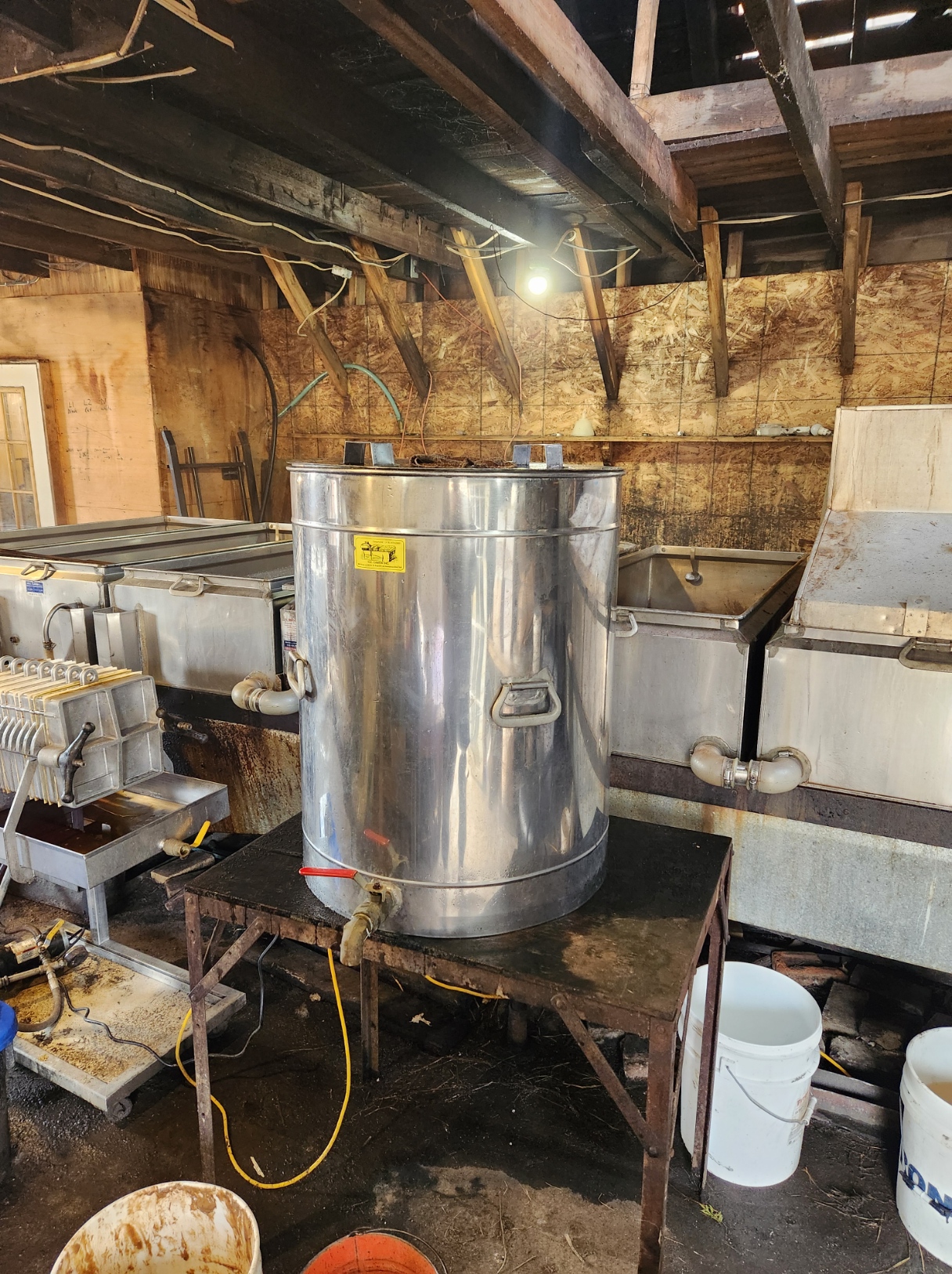
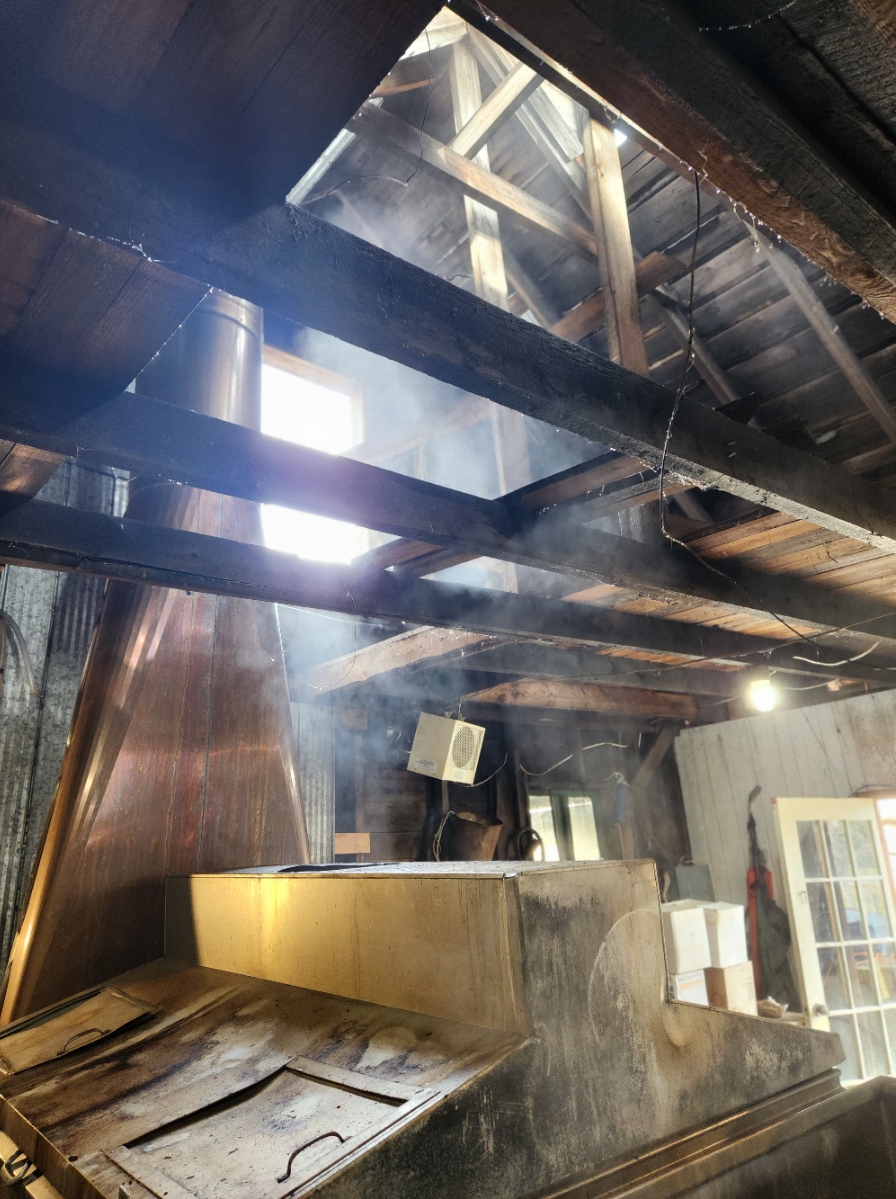
Later on, they added a connected tubing system – pipelines gather the sap to specific locations, then hauled to the sugar shack. The long procedure of boiling has been shortened from wood fired, to oil heated, to reverse osmosis, a system that separates water from sugar molecules at high pressure.
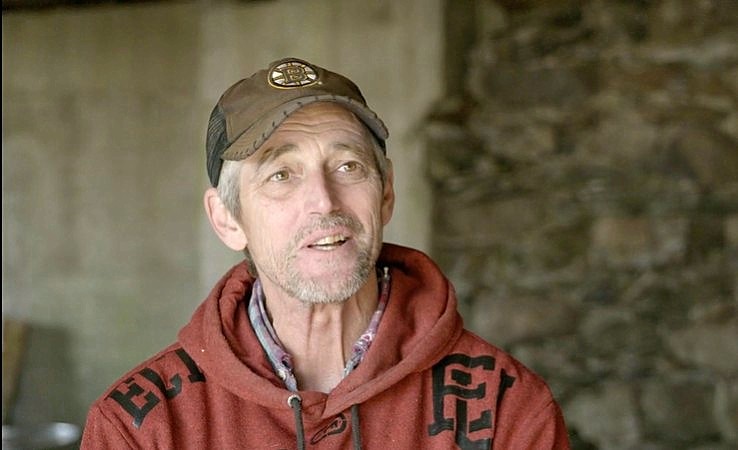
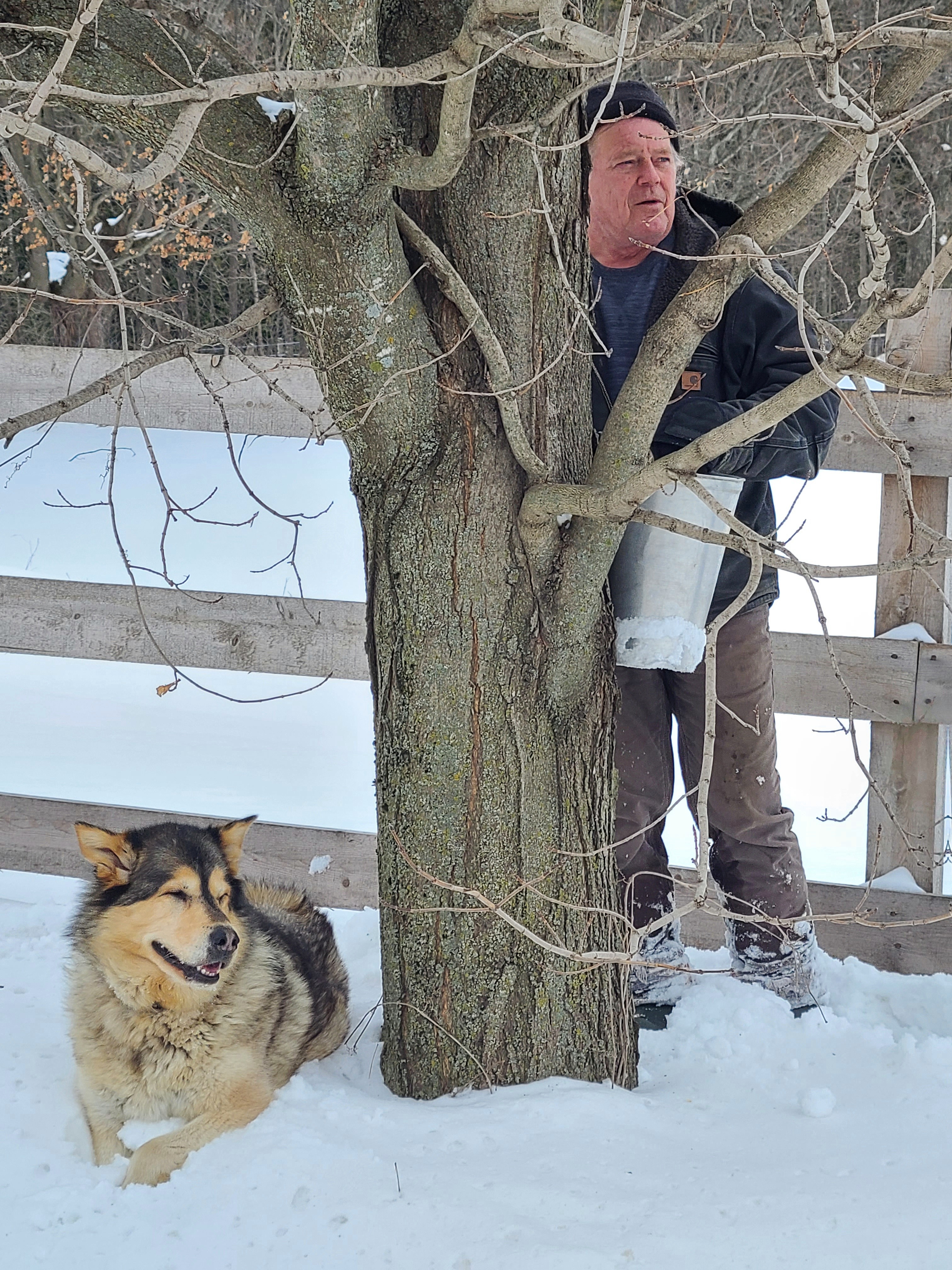
This year, 2025, Stanley Junior began 12,000 taps on their maple trees in early January. It takes a lot of time trudging through snow with the help of his brother-in-law Tony Schoolcraft, Billy Witzel, and Junior’s son James. Alaska, Tony’s dog, loves to be involved too, and helps them by carrying equipment back and forth. It’s mostly pipeline now with just a few pails; only 200 were placed in certain areas. Tapping takes about 2 months and the Sugar house needs to be set up too.
When Mother Nature decides it’s time, the sap starts to run – usually in mid-March – this year it was finished by the first week of April. Modern methods have reduced the time of boiling to late afternoons most days. But the process of gathering and boiling is still labour intensive along with equipment maintenance that always needs to be done. At the end, everything needs to be cleaned and gathered for storage.
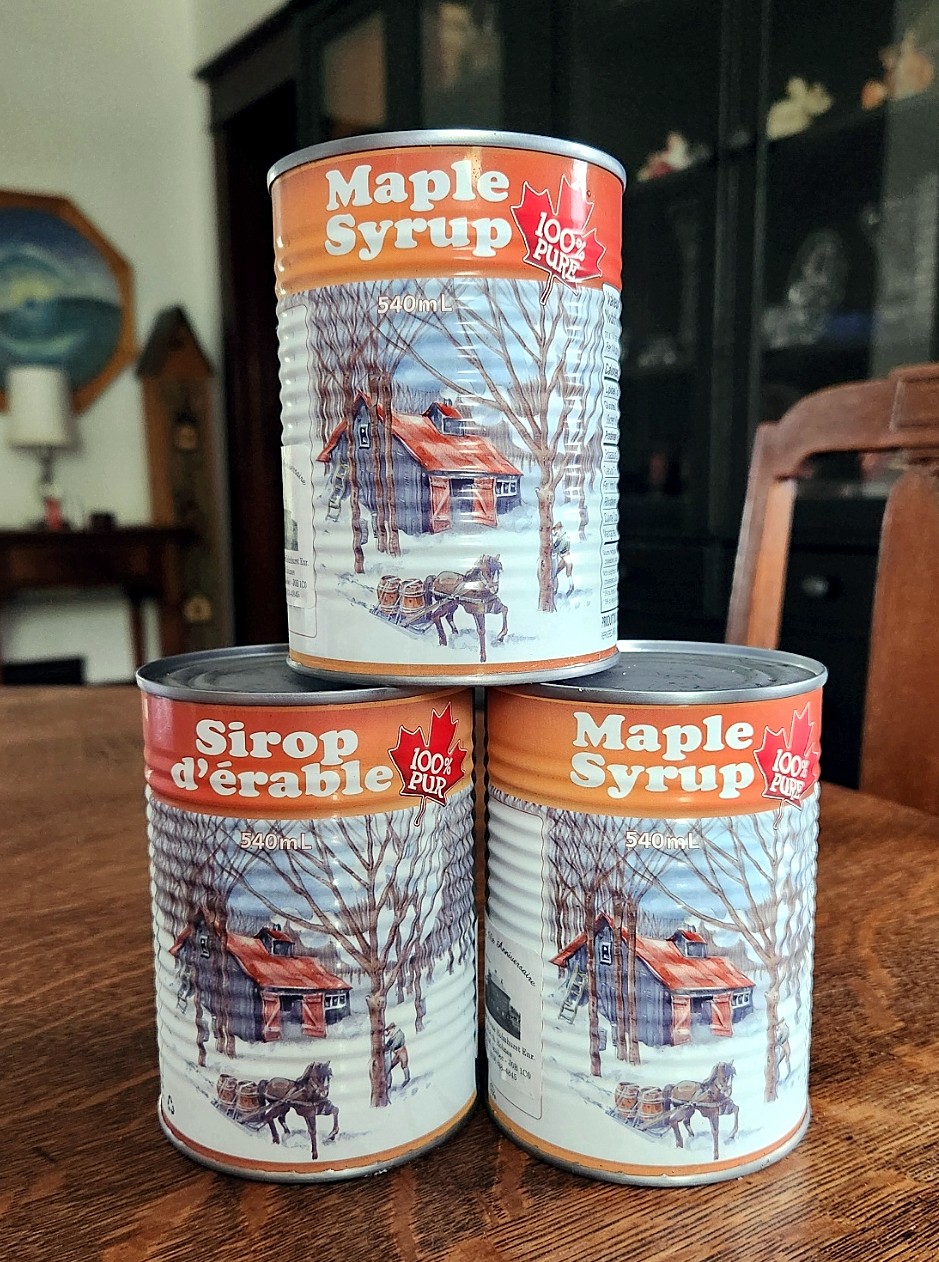
By the early 1950s, canning became the method to preserve maple syrup. A contest was held in Quebec and the iconic can of 540 ml. was designed, adorned by the legendary image we still see today. The Holmes family can some of these for distribution to individuals or small businesses; but the bulk of their syrup is put into barrels. This year they put out 34 barrels that hold 205 litres or 45 gallons each. These are sold to the Federation of Quebec Maple Producers. This organization was formed in 1966 to help distribute this valuable commodity to the world market. They represent 13,500 producers who collectively make 72% of the world’s maple syrup crop.
Québec is unique for their rigorous classification of maple syrup. The process guarantees quality and divides maple syrup into four colour categories. Each colour denotes a distinct flavour. However, Nature determines this quality and the sugar content. First of all, the unique taste of maple syrup is dependent on the soil that the trees grow in. Therefore, location, is most important. Not only that; but the taste varies between bush locations on their farm. The older maples have more sugar content than the younger ones.
Weather controls the entire process; the sap runs best when it’s good and muddy out there and stops if it gets too dry. If its too warm in the day and not cold enough at night it doesn’t run. Sometimes the absence or presence of snow makes a difference. The good farmers learn over years of experience and patience to take advantage of the best that the forest offers. Remember their hard work and expertise when you savour the precious golden syrup produced in the province of Quebec.


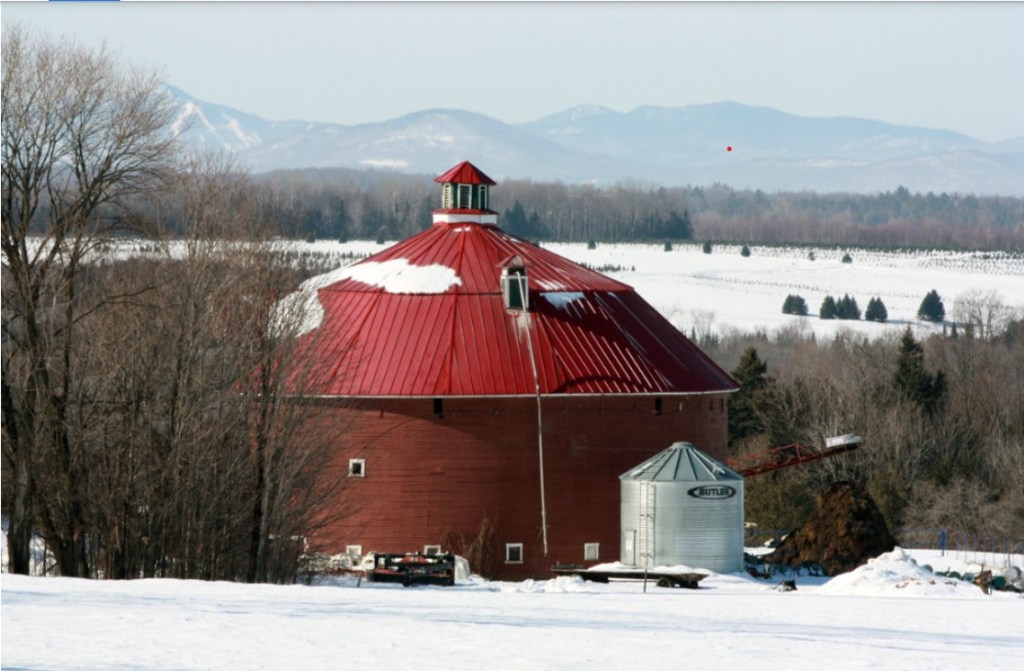
 the Holmes Round Barn
Leave a comment